ISO 9001:2026: What Changes for SMEs and the Transition Deadline
Digital Airways·

ISO 9001:2026 was published on 16 September 2026 and replaces ISO 9001:2015. Certified companies have three years to transition, and according to certification bodies the transition period ends on 30 September 2029. After that date, certificates to the 2015 edition are no longer valid. In substance the revision is an evolution, not a change of direction. The main new requirements are an active quality culture and ethical behaviour, separate treatment of risks and opportunities, determining whether climate change is relevant to the organisation, and stricter management of changes. The clause structure 4 to 10 remains.
Key dates at a glance
| Milestone | Date | Source |
|---|---|---|
| Publication of ISO 9001:2026 | 16.09.2026 | DQS, SQS, LRQA |
| German edition DIN EN ISO 9001:2026 | announced for November 2026 | DIN Media |
| Accreditation bodies ready for assessments | 31.03.2027 | SQS |
| All certification bodies transitioned | 20.09.2027 | SQS |
| No new certificates to ISO 9001:2015 | 31.03.2028 | SQS |
| End of transition period, 2015 certificates expire | 30.09.2029 | SQS, LRQA, DQS, NQA |
The transition rules are set by the Global Accreditation Cooperation, Global ACI for short. It took over the tasks of the International Accreditation Forum (IAF) at the beginning of 2026. The sources largely agree on the end date, less so on the interim milestones. SQS points out that the official transition rules had not yet been published when it went to press and that dates may shift. DQS gives 30 September 2029 explicitly subject to a decision by Global ACI. Occasionally 15 September 2029 is mentioned, exactly 36 months after publication. Certification bodies may also set their own, earlier cut-off dates. What counts for you is what your certification body confirms in writing.
What changes compared with ISO 9001:2015
Quality culture and ethical behaviour
The biggest change in substance concerns leadership. Under clause 5.1.1, top management must actively promote a quality culture and ethical behaviour. Until now this was implied at most, now it is an auditable requirement. Clause 7.3 adds that employees must be aware of the quality culture and the ethical principles. According to several certification bodies, the topic also extends to the environment for the operation of processes, clause 7.1.4.
For SMEs this does not mean writing an ethics manual. In the audit you are more likely to be asked how management sets an example on quality, how errors are reported and whether employees know which values apply.
Risks and opportunities separated
In the 2015 edition, risks and opportunities sat together in clause 6.1. The new edition separates them. Clause 6.1.2 covers actions to address risks, clause 6.1.3 actions to address opportunities. Opportunities are therefore no longer the flip side of a risk, but are determined in their own right, given actions and evaluated for effectiveness. According to analyses by certification bodies, the separation carries through to the analysis in clause 9.1.3 and to the inputs of the management review in clause 9.3.
Climate change in the context of the organisation
This change is not entirely new. In February 2024 the amendment ISO 9001:2015/Amd 1:2024 was published. In clause 4.1 it requires an organisation to determine whether climate change is a relevant issue, and in clause 4.2 it adds that interested parties can have requirements related to climate change. ISO 9001:2026 incorporates this amendment in full. If you have been audited since 2024, you may already know the point. What is required is a reasoned assessment, not a climate programme.
Stricter management of changes
Clause 6.3 on planning of changes is expanded. Besides the purpose of a change, the integrity of the system, resources and responsibilities, communication, monitoring of effectiveness and review of results are now also to be considered. Clause 5.3 adds that the integrity of the QMS is maintained during changes.
Terms and annexes
Clause 3 now contains a limited number of core terms directly in the standard, with ISO 9000 remaining the basis. The informative Annex A has been significantly expanded and explains structure, terminology and concepts without adding new requirements. Here the sources differ. BSI describes Annex A as the first annex in ISO 9001, although the 2015 edition already had informative Annexes A and B. Another analysis states that Annex B has been removed. Only the text of the standard can settle this.
What stays the same
The standard follows the harmonized structure of ISO management system standards, and clauses 4 to 10 remain. The process approach, the PDCA cycle and risk-based thinking stay central. According to BSI, clause 8 on operation changes only slightly, and documented information in clause 7.5 sees only changes in terminology. A working QMS to the 2015 edition therefore does not need to be rebuilt.
Clauses 2015 compared with 2026
| Clause | ISO 9001:2015 | ISO 9001:2026 |
|---|---|---|
| 3 Terms | reference to ISO 9000 | core terms directly in the standard, ISO 9000 remains the basis |
| 4.1 and 4.2 Context | climate change only since the 2024 amendment | determination of climate change fully integrated |
| 5.1.1 Leadership | commitment of top management | additionally promote quality culture and ethical behaviour |
| 5.2 Quality policy | appropriate to context and strategic direction | stronger link to strategic direction |
| 5.3 Roles | responsibilities and authorities | adds integrity of the system during changes |
| 6.1 Risks and opportunities | addressed together | separated into 6.1.2 risks and 6.1.3 opportunities |
| 6.3 Changes | four considerations | expanded by communication, effectiveness and review of results |
| 7.1.4 Process environment | social, psychological and physical factors | note on the influence of quality culture and ethics |
| 7.3 Awareness | policy, objectives, own contribution, consequences of nonconformity | additionally quality culture and ethical behaviour |
| 7.5 Documented information | creating, updating, control | changes in terminology only |
| 8 Operation | planning and control, requirements, design, external providers, production | largely unchanged |
| 9.1.3 and 9.3 | effectiveness of actions on risks and opportunities together | risks and opportunities analysed separately, management review inputs expanded |
| 10 Improvement | nonconformity, corrective action, continual improvement | note that customer complaints can be a source of nonconformities |
| Annexes | informative Annexes A and B | Annex A expanded, still without requirements |
The information down to the level of main clauses is consistent across all sources reviewed. Sub-clauses such as 5.3, 6.3, 7.1.4 and 10 come from analyses by individual certification bodies and consultants. Check them against the text of the standard before you act on them.
What SMEs should do now
There is no time pressure, yet waiting does not pay off either. The transition can be combined with the normal audit cycle if you start early. SQS recommends a seven-step process, from the gap analysis and adapting the system to an internal audit that checks whether the implementation has worked. Suitable questions can be found in our checklist for the internal audit.
Gap analysis as a checklist
- Obtain the standard. The English edition is available, the German one has been announced. In Switzerland standards are distributed by SNV.
- Review the context. Is climate change relevant to your organisation? Is the assessment reasoned and recorded in a traceable way?
- Review interested parties. Do customers, authorities or investors have requirements related to climate change?
- Evidence quality culture. How does management promote quality and ethical behaviour, and where can you see it day to day?
- Train awareness. Do employees know the values you live by as well as the policy and objectives?
- Separate risks and opportunities. Do you manage opportunities with their own actions and their own effectiveness evaluation, not just as the counterpart of a risk?
- Extend change management. When the QMS changes, is communication planned and is effectiveness monitored?
- Update the management review. Does the template contain the expanded inputs, separated into risks and opportunities?
- Update documents. Bring the quality policy, process descriptions and references to clause numbers up to date.
- Agree the date. Agree with your certification body in which audit you will transition and how much extra effort it involves.
Timeline to the recertification audit
- By the end of 2026. Obtain the standard, train the people responsible for quality, inform management.
- First quarter of 2027. Carry out the gap analysis, define actions with owners and deadlines.
- During 2027. Implement the actions, update documents, raise awareness among employees.
- Before the transition audit. Carry out an internal audit to the new edition and hold a management review with the new inputs.
- Transition audit. As agreed with your certification body, during a surveillance or recertification audit, well before 30 September 2029.
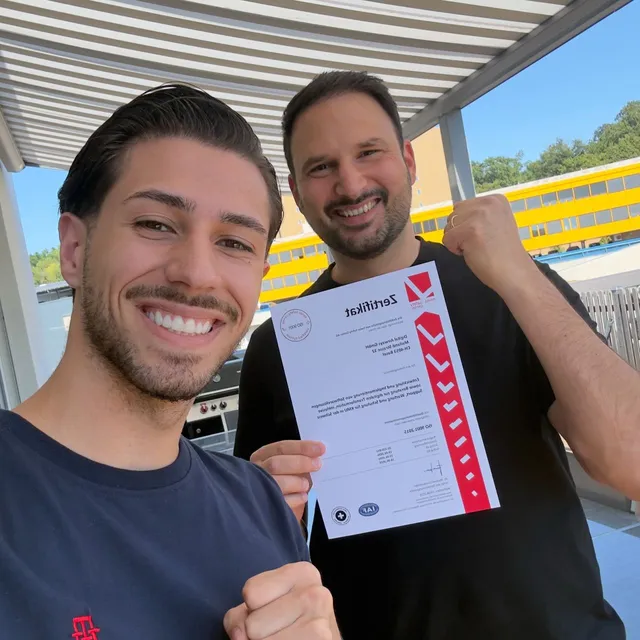
An example from our own company. Digital Airways has been certified to ISO 9001:2015 since June 2026, and the certificate runs until June 2029. Recertification therefore still falls within the transition period, but leaves little buffer. If you are in a similar position, it is better to transition at the second surveillance audit. A recertification audit shortly before the deadline leaves no room for corrections.
Where software helps with the transition
The revision mainly affects topics that need ongoing maintenance rather than one-off documentation. A QMS software is better suited to this than a collection of Word and Excel files.
In QuKI, our QM software with AI, every document in document control gets a version, validity, a review date and four-eyes approval. Revised process descriptions and the updated quality policy are approved in a traceable way. In risk management you keep risks and opportunities in a risk matrix, with actions, deadlines and effectiveness checks. The management review pulls together the key figures from all booked modules, and you ask the AI questions about your figures in your own words.
If you are not certified yet, you build your QMS yourself with the ISO 9001 Builder, with learning modules and an AI assistant that creates the documentation in an interview. For an initial certification, clarify early with your certification body which edition you will be audited against. Based on the information available so far, no new certificates to ISO 9001:2015 will be issued from 31 March 2028.
Frequently asked questions about ISO 9001:2026
Is ISO 9001:2026 already in force?
Yes. The standard has been published since 16 September 2026 and can be applied immediately. Certification bodies offer certification audits to the new edition as soon as they are accredited for it. Ask your certification body about the current status.
By when do I have to transition to ISO 9001:2026?
According to SQS, LRQA, DQS and NQA, the transition period ends on 30 September 2029. By then the transition audit must have been completed successfully. Your certification body may set earlier cut-off dates.
Does my ISO 9001:2015 certificate lose its validity now?
No. Certificates to ISO 9001:2015 remain valid throughout the transition period. After 30 September 2029 they expire or are withdrawn.
Is an additional audit needed for the transition?
Not necessarily. According to SQS, the transition can take place during a regular surveillance or recertification audit. Because the changed requirements are assessed in addition, expect somewhat more audit time.
Is ISO 9001:2026 available in German?
DIN Media lists DIN EN ISO 9001:2026 with the issue date November 2026, as a German and English edition. Until then the English original is authoritative.
Do I have to rewrite my quality manual?
No. According to certification bodies, the requirements for documented information change only in terminology. You need to adapt the parts affected by the changes, such as context, risks and opportunities, quality policy and management review, as well as references to clause numbers.
Implementing ISO 9001:2026 with QuKI
Would you like to see how you manage documents, risks and opportunities and the management review for the new edition in QuKI? In a 30-minute demo we show you, using your own processes.